Home    Contact    Links  


   Plasma Cosmology

   The Electric Universe

   Science and Philosophy

   Ancient Testimony
        Mythology
        Catastrophism
        Plasma Mythology
        Peratt & Petroglyphs
        The Cosmic Pillar

   Cutting Edge

   The Way Forward

   Latest News

   Video


The Cosmic Pillar


The Axis of Heaven in Myth, Ritual and Ancient Memory

Across widely separated cultures, one of the most persistent images in ancient cosmology is that of a great column, tree, mountain or axis joining Earth to heaven. It may appear as the pillar of a god, the trunk of a sacred tree, a mountain at the centre of the world, or a fixed support around which the heavens turn. The names vary, but the underlying idea is remarkably consistent.

The conventional interpretation treats such imagery as symbolic: an imaginative expression of the invisible axis of the sky or a metaphor for the ordered cosmos. Yet the recurrence of very specific details raises another possibility. Could these traditions preserve memories of a celestial structure that ancient observers believed they had actually seen?

This page brings together evidence from comparative mythology, ritual, sacred architecture and ancient cosmology. The aim is not to assume that every tradition has a single explanation, but to ask why the same basic pattern appears again and again: a central pillar, the separation of heaven and Earth, circling stars or dancers, sacred ties and bands, and earthly monuments explicitly modelled on a heavenly original.


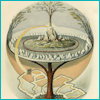
World tree and cosmic axis
   
   
About Ev Cochrane    
     

Much of the material examined on this page draws upon the work of comparative mythologist and independent researcher Ev Cochrane, whose research spans nearly half a century.

Cochrane has concentrated particularly on ancient cosmogonic myth, archaeoastronomy, and recurring planetary themes found in widely separated cultures. His central argument is that many of the world's oldest myths may preserve memories of extraordinary celestial events witnessed during the prehistoric period.

His recent books include Egypt Under the Stars and The Case of the Turquoise Sun. Earlier works include Martian Metamorphoses and The Many Faces of Venus.

Across this work, Cochrane explores recurring traditions involving planetary gods, creation, the world pillar, Venus as the Queen of Heaven, Mars as the warrior-hero, and the possibility that ancient ritual and monumental architecture preserve echoes of a once very different celestial order.

See Maverick Science for further articles, books and research.

  Ev Cochrane
     
A Universal Motif    
     

The world pillar is one of the most widespread structures in ancient cosmology. It is the vertical axis at the centre of the ordered world, linking the realms above and below and, in many traditions, literally supporting the sky.

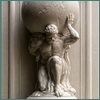
Among the Germanic peoples, the great Irminsul was described as a column of the universe, an upright support that carried all things. Greek tradition gave the same cosmic function to Atlas, condemned to uphold heaven. Plato described a straight celestial pillar extending through heaven and Earth, while Euripides could speak of a holy light towering between the two.

Vedic India preserves an especially rich version of the same theme. Indra, the great thunder god, is repeatedly praised for propping up heaven and separating it from Earth. Closely related is Skambha, literally the prop or support, a fixed cosmic pillar on which heaven and Earth stand fast. The two concepts overlap so closely that some Vedic passages effectively identify Indra with the Skambha itself.

Egypt offers a striking parallel in the god Shu, who stands between the earth god Geb and the sky goddess Nut, raising the heavens with his upturned arms. The familiar image is again that of a living support separating the two halves of the cosmos.

These traditions arise in cultures separated by geography, language and history. Yet their central image is remarkably stable: a fixed vertical support at the centre of the world, joining or separating Earth and heaven.

  Atlas supporting the heavens
     
As Above, So Below    
     

The pillar did not remain confined to myth. Ancient peoples repeatedly attempted to reproduce the structure of the cosmos in the world around them. The old principle commonly expressed as as above, so below was not merely philosophical. It shaped cities, temples, ceremonial spaces and ritual landscapes.

Early Mesopotamian temples were described in language identifying them with the world mountain. Cities were frequently ordered according to the four cardinal directions, with a sacred centre acting as the meeting point of the cosmic quarters. Similar ideas occur in Egypt, India, China, Mesoamerica and elsewhere.

Mircea Eliade drew particular attention to this pattern. In his analysis of sacred space, temples and cities were not arbitrary constructions but earthly copies of a celestial order established at creation. The sacred building stood at the centre because the centre was where the worlds met: heaven above, Earth below, and the cosmic axis passing through both.

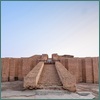
Maya pyramids, Mesopotamian temples and other monumental structures therefore become more than large buildings. Within their own religious systems they were replicas of the ordered cosmos. The human settlement became a cosmogram.

The obvious question follows. If ancient peoples repeatedly claimed to be copying heaven, what exactly were they copying? Why did the heavenly prototype so often take the form of a fourfold world organised around a central column, tree or mountain?

  Great Ziggurat of Ur


Sun Cross Polar Configuration
     
The Pillar at Creation    
     

The world pillar is especially important because it is repeatedly associated with creation itself. In many cosmogonies, the decisive act is the separation of heaven and Earth. Before this separation the two are joined, compressed or undifferentiated. The pillar appears at the moment when the ordered world takes shape.

In the Rigveda, Indra's great deeds include holding Earth fast, spreading it out and propping heaven aloft. Later Vedic tradition preserves the same idea in the Skambha: a stable support by whose power heaven and Earth remain fixed in their proper places. The pillar is therefore not an incidental decoration. It belongs to the architecture of creation.

The Egyptian Shu performs almost exactly the same function. He raises Nut away from Geb and becomes the space between them. Egyptian texts describe a great prop separating Earth from sky, while the associated imagery frequently shows the god with raised or forked arms supporting the heavens.

This forked form introduces another intriguing element. In Vedic imagery Indra is often given a bovine aspect, particularly when functioning as the support of heaven. The upturned horns of the bull can be compared visually with the upraised arms of Atlas or Shu. Whether these correspondences are historical, symbolic or observational, the same basic geometry appears repeatedly.

The pillar at creation is thus more than a line through an abstract cosmos. It is described as stable, upright, visible, load-bearing and central to the separation of heaven and Earth.

  Shu separating heaven and Earth
     
The Pillar in Ritual    
     

Ancient ritual repeatedly brought the cosmic pillar down to Earth in material form. Trees were cut, poles erected, pillars decorated and crowds gathered around them in ceremonies that re-enacted the ordering of the world.

In India, the Indra festival centred on a great pole or tree raised amid celebration. The standard represented Indra himself and was renowned for its fixity. The resemblance to the European Maypole tradition is difficult to miss: a central decorated pole, communal celebration and circular movement around the axis.

Comparable practices appear in Slavic traditions surrounding the thunder god Perun. In Greece, Dionysus could be represented by a stake or pillar around which worshippers danced. Across the Atlantic, the Aztecs erected a great ceremonial tree or pole with enormous effort, accompanied by shouting and public celebration.

What matters is not merely that different cultures used poles. The important point is the combination of features. The pole occupies the sacred centre. It is raised ceremonially. It is decorated. It may embody a god. The crowd circles it. And the rite is commonly tied to renewal, creation, seasonal transition or the re-establishment of cosmic order.

Seen in isolation, any one of these customs might be explained locally. Taken together, however, they suggest that ritual communities were repeatedly staging the same cosmic drama in miniature.

  Maypole ritual
     
Stars Around the Axis    
     

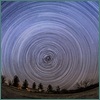
One of the most curious features of pillar ritual is the circular dance. Why should celebrants move around the central pole rather than simply stand before it?

Ancient Greek traditions provide an intriguing clue. Dionysus was associated with the chorus, and some sources describe him as the leader of the stars. The circular dance around the god could therefore mirror the apparent rotation of the heavens around a fixed centre.

The same interpretation has been applied more broadly to sacred dance. Human beings imitate the heavens. The central pole becomes the cosmic axis, while the dancers take the place of the circling stars. The ritual is therefore not merely devotional. It is a moving model of the sky.

This helps explain why circular dances recur beside world trees and sacred pillars in societies that otherwise share little. The form itself carries cosmological meaning: a fixed centre surrounded by revolving bodies.

It also strengthens the connection with the principle of as above, so below. The temple copies the celestial mountain. The pole copies the world axis. The dancers copy the stars. Human ritual becomes a deliberate terrestrial imitation of the heavens.

  Star trails around the celestial pole
     
The Pillar, Venus and the Sacred Bond    
     

Another recurring detail is that the world pillar is not always shown alone. It may be wrapped, tied, garlanded or accompanied by a band-like object. This feature becomes particularly interesting when compared across Mesopotamian and Egyptian traditions.

In Babylonian cosmology, the goddess Ishtar — identified with Venus — could be associated with the bond or tie that supported the sky. Related terminology connects this celestial bond with the world pillar itself. The image is therefore not simply a free-standing column, but a pillar accompanied by a surrounding or attached band.

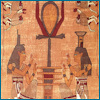
The Egyptian Djed provides another suggestive parallel. The Djed was a symbol of stability and durability and could function as a cosmic support. It was also associated in Egyptian symbolism with a distinctive tie or knot connected with the goddess Isis. Pillar and band once again appear together.

Decorated ceremonial poles elsewhere may preserve echoes of the same pattern. Garlands, streamers, knots and bands are so common that they are easily dismissed as ornament. Yet within a cosmological framework they may have carried a specific meaning: the visible bond of heaven attached to the central support.

For proponents of the Saturnian reconstruction, this detail is especially important because Venus is proposed to have appeared close to the axial configuration. That identification remains highly controversial, but the recurring association of pillar, goddess and celestial bond deserves consideration on its own terms.

  Aphrodite, associated with the planet Venus
     
A Celestial Prototype?    
     

The conventional explanation for the world pillar is straightforward. Ancient observers watched the stars turn around the celestial pole and imagined an invisible axis running through the heavens. The pillar, tree and mountain then became symbolic expressions of that unseen geometry.

That interpretation explains part of the pattern, but perhaps not all of it. The ancient traditions often describe the pillar in surprisingly concrete terms. It is fixed, upright and luminous. It supports the sky. It separates heaven and Earth. Gods appear in its form. Ritual poles are said to reproduce it. Temples and cities are consciously built as copies of a celestial original.

David Talbott and Ev Cochrane have proposed a more literal interpretation. In their reconstruction, the myths do not begin with an abstract axis but with extraordinary celestial events witnessed in prehistoric times. The world pillar, in this view, preserves a cultural memory of an actual structure seen in the sky during a very different arrangement of the planets.

This hypothesis goes considerably beyond conventional archaeology and astronomy and remains disputed. It should therefore be treated as a proposal rather than an established conclusion. Yet it has one obvious strength: it attempts to explain why so many cultures insist that the prototype existed in heaven first and was copied on Earth afterwards.

The question is ultimately historical. Did widely separated peoples independently turn an invisible celestial axis into remarkably similar myths, rituals and architectural forms? Or did they inherit memories of something more tangible — a spectacular celestial configuration that later became the model for sacred order?

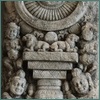
  Ancient carving with pillar and celestial disc
     
Conclusion    
     

The cosmic pillar sits at the intersection of mythology, astronomy, ritual and architecture. It appears as Irminsul, Atlas, Indra, Skambha and Shu; as the world tree, world mountain and Djed; as the central pole of ritual; and as the axis around which dancers and stars revolve.

No single example proves that ancient skies were physically different from those of today. Nor does the widespread presence of an axis mundi require a catastrophic astronomical explanation. Human beings everywhere observe the rotation of the heavens and naturally organise sacred space around centres, directions and vertical connections.

But the degree of agreement remains striking. The pillar is repeatedly linked with creation, the separation of heaven and Earth, stability, celestial support, sacred centres, circular motion and earthly copies of a heavenly prototype. These are not random similarities scattered through unrelated stories. They form a coherent complex of ideas.

That leaves a question worth preserving rather than prematurely answering. Why did cultures separated by oceans and millennia repeatedly imagine the same central structure — a pillar joining Earth and sky, copied in temples, embodied in gods, recreated in ritual and surrounded by circling motion?

Perhaps the cosmic pillar is simply one of humanity's most enduring symbols. Or perhaps, as Talbott and Cochrane argue, the symbol itself is a memory.

“If you have had your attention directed to the novelties of thought in your own lifetime, you will have observed that almost all really new ideas have a certain aspect of foolishness when they are first produced.”
Alfred North Whitehead, Science and the Modern World


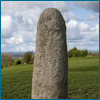
  Lia Fail standing stone